
Why Salesforce’s Real AI Advantage Is the Platform Beneath It


Two months ago, I said I believed Salesforce was significantly undervalued.
The market was focused on AI disruption while overlooking Salesforce’s biggest advantage: the stability and adaptability of its core enterprise platform.
There will always be smaller AI solutions that move faster or solve a specific problem exceptionally well. But products change, vendors disappear, and business requirements evolve. Companies can then find themselves migrating data, rebuilding integrations, retraining users, and reinvesting in the same process on another platform.
Salesforce provides a more stable foundation.
Its data architecture, permissions, workflows, business logic, integrations, reporting, and governance remain in place while the technology around them evolves. Organizations can decide which capabilities to adopt, when to introduce them, and how they fit into existing operations without rebuilding everything around each new tool.
Claudeforce Reinforces the Thesis
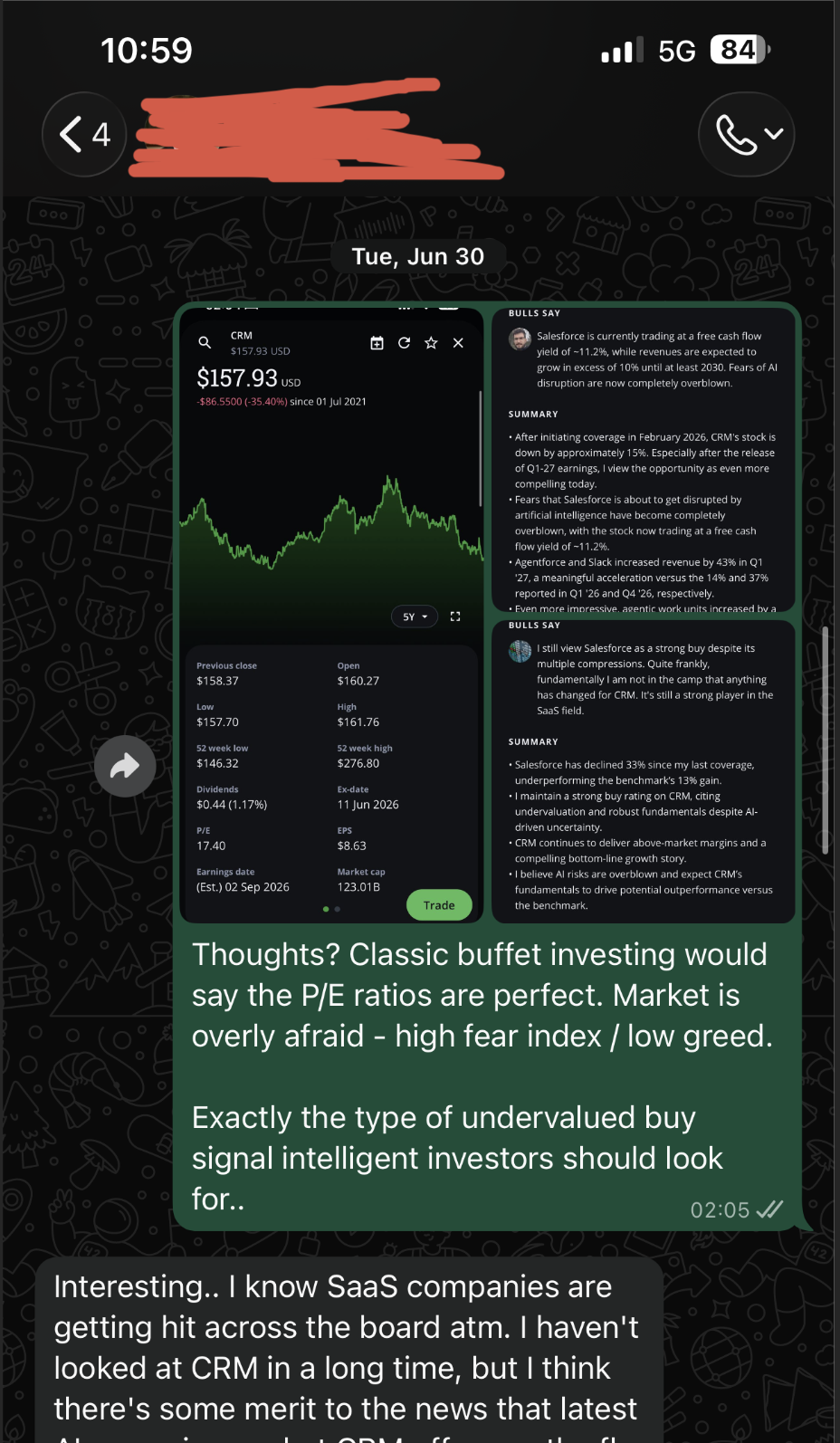
The expanded Anthropic collaboration and introduction of Claudeforce contributed to the recent shift in market sentiment.
But the announcement reinforces the broader platform advantage rather than creating it.
Claudeforce brings Claude’s reasoning together with Salesforce data, workflows, business rules, actions, and governance. Claude provides the intelligence. Salesforce provides the enterprise context and trusted environment needed to turn that intelligence into practical action.
Salesforce does not need to build or own every leading AI model. Its advantage is the ability to bring those models into an established enterprise architecture.
What We See on the Front Lines
Being on the front lines of business development, we also see the constant work Salesforce teams and partners put into customer education, analyzing platform-process fit, and aligning technology decisions with each organization’s goals and mission.
Enterprise technology succeeds when the platform, processes, and people are aligned. The feature alone is rarely enough.
After more than a decade working in the ecosystem as an architect, and the past several years building Terrabbit’s Salesforce practice, I continue to see the same underlying strength.
Salesforce moves quickly. Not every release or initiative will be perfect. But its willingness to experiment, form strategic partnerships, adapt, and continue investing at enterprise scale has consistently kept the platform moving forward.
The recent market movement feels less like a new story and more like a recalibration from AI disruption fears toward Salesforce’s long-term stability, adaptability, and growth potential.
The models will change. The enduring advantage is the platform beneath them.
🚀 Considering how AI should fit into your Salesforce architecture?
*This article reflects the author’s personal opinion and is not investment advice.
**This article was written with the assistance of ChatGPT. The ideas and content are our own, however, the GPT model was used to compile and structure the content.
.png)
Azfan Jaffeer
Founder, Principal Consultant


